

Rereading books is a bit like opening a tin you forgot was at the back of the cupboard. Sometimes it is still delicious. Sometimes it hisses when you lift the lid and you question every life choice that brought you to this moment.
Over the years I have gone back to plenty of novels I once adored. Occasionally it is pure necessity. You are between books, the library pile has dwindled to a lonely bookmark, and there on the shelf sits an old favourite, smug and dog eared. Other times it is comfort reading, the literary equivalent of wrapping yourself in a familiar jumper when life starts throwing paperwork and plumbing bills at your head.
But is it ever a good idea?
Think back to the first time you read a book that truly grabbed you. The kind that hijacks your thoughts for days. You ration the final chapters, trying to slow down, stretching out the goodbye like a lingering farewell on a draughty railway platform. Then you finish it and become an unofficial ambassador. Friends, relatives, the person stuck behind you in the queue all hear about this life changing masterpiece. Eventually another story sweeps in and the old favourite drifts into a dusty corner of memory, glowing softly in the dark.
Then one day you spot it again and think, I will relive that magic.
Hold on. This is where danger lives.
Because what if it is not the sharp, dazzling story you remember? What if you have changed, or the world has, and the book now reads like a relic from a less thoughtful age? What if, in the harsh light of the present, your beloved classic turns out to be deeply embarrassing? There is always that risk, and the longer the gap since you first read it, the greater the gamble.
I am not talking about childhood books. Those are a category of their own. I grew up on the Famous Five and Swallows and Amazons, tales of children roaming freely and having adventures with minimal adult supervision and an alarming lack of packed lunches. I wanted desperately to be one of them, and spent hours stomping around local woods pretending a fallen tree was a pirate ship.
Of course, those books are dated. The values, assumptions and social norms belong firmly to another era. Read straight, without context, some of them jar badly with modern attitudes. They were products of their time, and perhaps are best left as fond memories rather than core reading for today’s children. Nostalgia can be warm and golden, but it can also blur the rough edges.
This leads to the thorny issue of editing older books to make them more acceptable. The recent changes to Roald Dahl’s work sparked plenty of debate. Personally, altering an author’s words after the fact feels wrong. Books reflect the minds and times that produced them, warts and all. That does not mean every old book deserves a place on a modern child’s bedside table. Some stories can quietly step aside, making room for newer voices that speak more kindly and more clearly to today’s readers.
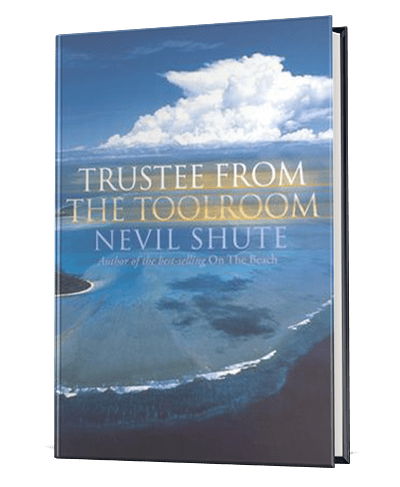
Then there are the books we read in our teens and early adulthood, the ones that shaped how we saw the world. For me, one of those was Round the Bend by Nevil Shute. On the surface it is about the post war aviation industry. Underneath, it explores work, belief and the idea that different religions share common ground. It opened my eyes to perspectives I had never considered.
Reading it now is a more complicated experience. The story still has power, but the language and attitudes of its era are woven through it. Words appear that we would never use today. Views surface that make you wince. I do not share those attitudes, and I have no desire to defend them, yet I still find value in the book as a snapshot of its time and as a story that once helped shape my thinking. It becomes less a timeless novel and more a historical artefact that still has something to say, if read with awareness.
More recently I revisited a series of crime novels by Stuart Pawson, featuring Detective Inspector Priest in a fictional corner of West Yorkshire. When I first read them around the turn of the century, they were simply entertaining police procedurals with a streak of humour. Coming back to them now, they land differently.
The newer editions carry a warning about outdated attitudes, which is fair enough. There is casual racism, sexism and a fair number of groan worthy jokes that should probably have been arrested at the scene. Yet they also capture a particular culture and time, especially within the police force. They remind me of my own experiences decades ago, not always flattering, but recognisable. As the series progresses, you can almost see the author adjusting his tone as society shifts around him.
Rereading them feels a bit like walking through a museum exhibition about the recent past. You recognise the furniture, but you would not want to take it home and use it every day.
So, should we revisit our old favourites or leave them undisturbed on the shelf?
I suspect the answer is yes, but with caution. Rereading can be rewarding. It can show you how much you have grown, how your tastes have changed, and how the world has moved on. It can also be disappointing, even unsettling, when a once loved story no longer sits comfortably.
If you do return to those treasured books, go in with your eyes open. They may not be the books you remember. They may be better in some ways, worse in others, or simply different. Either way, the experience tells you as much about who you are now as it does about the book you once loved.